In a Nutshell: U.S. stocks fell along with interest rates on domestic economic growth concerns. Global stocks, commodities and real estate provided solid returns in the face of U.S. weakness.
Domestic Equity: The Third Time Was Not the Charm
U.S. stocks finished down in the second month of the year and are now down for the year. We previously mentioned how important getting through the red box was, and on the most recent failed attempt (red arrows) a sell-off was triggered. It was a brisk sell-off as we saw a roughly 5% decline in the last ten days of February. At least part of the sell-off was triggered by economic growth concerns as February saw the U.S. economy slowing significantly. The good news is that economic growth looks poised to rebound over the next few months. Add in the traditionally-strong seasonal stock market of the spring months and we could be nearing an end to this correction. This sell-off took stocks down to the November election gap again and, to our next area of interest, the green box around 5750. With volatility in both stock prices and economic policy rising, we’ll manage risk tightly in the off chance the economy cannot rebound over the next few months.

While not necessarily a red flag, our participation indicator is looking pretty weak. Making a new low without getting to the oversold level (red line) is an indication that stocks are caught in a holding pattern. Not typical bull market behavior, but not bear market yet either.

We have a similar setup with our sentiment indicator. We’re seeing lower high-water marks over the past six months, with lower lows. Not a great look, but this by no means indicates our current bull market is over.

With no Fed meeting in February, rates held steady with short-term rates at 4.25%. The recent economic growth concerns have the bond market pricing in a couple of rate cuts in 2025, although none are projected over the next few months. The next Fed meeting in March will be important, as this will be their first chance to communicate that they see inflation falling. If they see inflation backing off, rate cuts get more likely
Global Equity: Leading the Globe
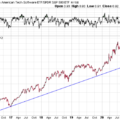
Over the past decade, sustained periods of outperformance of global stocks against U.S. stocks have been few and far between. However, so far in 2025 foreign stocks have set the pace for global investment markets. Although inflation is still lingering in regions like Europe, much of the rally is less about economic conditions and more about policy changes or lack thereof. As much as tariffs have been a talking point for the new U.S. administration, tariff policy has been more bark than bite, so global investors may think foreign economies have dodged a bullet.

Real Estate: Getting Defensive
Real Estate provided a safe haven for investors as U.S. stocks sank last month. The real estate sector was up nearly 4%, with stocks down over a percent in February. That 5% performance gap was fueled by falling interest rates. Interest rates and real estate prices tend to trade inversely, so the nearly 12% drop in interest rates from January to February was enough to entice investors into real estate, despite being in a risk-off environment. From a technical perspective, the real estate sector looks good. You can see below that price is up through the green pivot line. Holding that line will be key for the sector to continue its recent run.

Commodities: Need to Hold Here
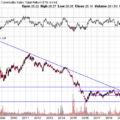
Commodities had another strong month, this time in the face of stock market weakness. This run may now be facing some serious headwinds. The recent fall in interest rates has been fueled by economic growth concerns in the U.S. and, by extension, falling inflation. For the first time in about six months, we are seeing the potential for a reprieve from inflation that may last the rest of the first half of the year. We should know if this information is starting to filter through to commodities prices pretty soon. The price level of 34 and 33 will be key to hold in the short term. If these levels break, we’ll likely see inflation falling soon.

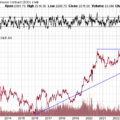
Gold continued to rip after breaking through the resistance area where the green arrow is. Gold is another interest rate-sensitive investment that typically trades inversely to interest rates. With rates plummeting to start the year, gold went higher.

Fixed Income: Growth Falls, Rates Fall
Interest rates (long-term) finished the month down over 12% from the early January high-water mark. You can see from the chart, rates collapsed into the green boxed area that we see as the current equilibrium. With inflation potentially giving way, the fall in rates is cause for some concern as the fall was more closely related to falling economic growth expectations. We see a best case scenario for the short term to be inflation stalling out, but rates not falling too much further from here, indicating some economic stability.

Our rate cut tracker below is now showing that at least one rate cut is being priced in by the bond market, an increase from just a month ago. This is just another indication that the bond market is a little concerned with the recent economic weakness. While there is a prevailing narrative that more rate cuts are good for the economy, too many would be a bad thing. If rates are cut more than once or twice, the economy is likely in a situation where policymakers are worried about the economy. That would be a bad scenario for risk assets.

All Terrain Portfolio Update
The All Terrain Portfolio is once again near full allocation. We held some dry powder through February because of our concern with economic and stock market weakness. With an anticipated economic recovery in sight, we’re again at maximum risk heading into March. We now carry about 15% in risk-averse, short-term treasuries less than three years in maturity that are paying interest in the 3.5-4.3% range. Although we see modest economic expansion in the first half of 2025, inflation concerns and economic policy will likely make for a messy investment backdrop to start the year. We will follow our indicators as we wait for investment opportunities, but remain agile within our process as new data is presented.

Chart as of 2/28/25
Past performance is not indicative of future results. Other asset classes or investment vehicles may be used in client portfolios and client portfolios may not hold all positions of the model at the same time as the model. This chart and its representations are only for use in correlation to the proprietary timing model by Arkenstone Financial, Registered Investment Advisor. Actual client and All Terrain Portfolio(TM) positions may differ from this representation.

- Rising Rates Wreak Havoc - October 9, 2026
- Stocks Pause, Await the Fed - September 4, 2026
- Interest Rates Rise, Stocks Stay Steady - August 4, 2026
Leave a Reply